

Day 13: In the Middle of Nowhere
- Molly Goldstein
- Feb 2
- 2 min read
Updated: Feb 15
February 2, 2026. Villa Cerro Castillo to Rio Muerte. 60 miles.

And the pavement ended. Just 9 miles outside of Villa Cerro Castillo. From here on, it is all unpaved ripio. The term "ripio" seems especially appropriate, as this type of road is usually loose gravel, often rippled into a rough washboard that shakes your whole body as you ride over it. When dry, passing cars and trucks kick up huge clouds of choking dust that clings like fine powder to everything and is hard to wash off. When wet, it is tamer, but can quickly turn muddy or sandy, making it challenging to maneuver. I was grateful for the rain the night before, as I much
preferred to avoid the dust.
Our ride this day was 60 miles, with over 5,000 feet of climbing, and with only a campsite awaiting us at the end—so remote is this part of the Carretera Austral. We followed the Ibáñez River upstream, pushing deeper into the valley surrounded by mountains. The day was cool and cloudy, providing dramatic views.

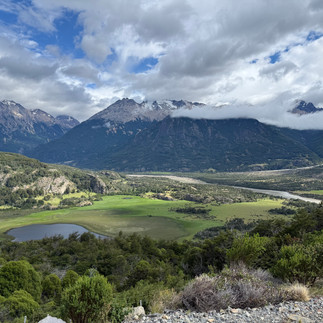


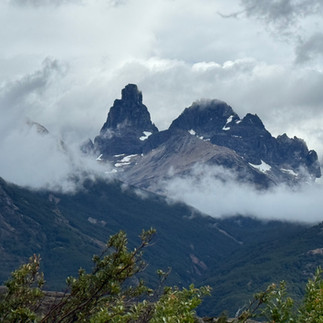

At the end of the river valley, we turned south and began to climb another mountain pass. Tackling this climb on gravel was no easy feat, but with a bit of extra effort, we made it to the top of a long high mountain pass that eventually dipped steeply into another valley: the Valley of the Río Muerta. Despite its ominous name (meaning "River of Death"), the valley was beautiful, following the pale blue glacial river toward the huge inland lake: Lago Carrera.
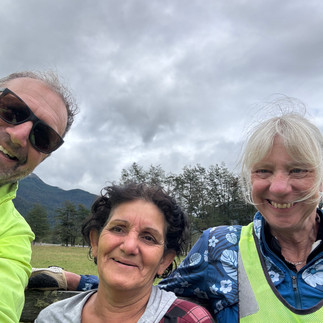
This evening marked our first night of camping, and we were grateful for a place to pitch our tent that also offered hot water for a shower. Camping Doña Dora, our location, is named after Dora, the woman who runs the place. A mother of four grown boys, she and her husband operate a sizable farm with sheep, three horses, a whole lot of chickens and ducks, and three dogs and two cats, all of whom came to greet us upon our arrival. Dora is one of those weathered Patagonian women who are tough on the outside but sweet and lovely on the inside. She has cultivated a stunning garden of flowers around her simple home, where she cooks on an old-fashioned wood stove. Her husband, a quiet and private man, smokes their own meat in an outside shed.

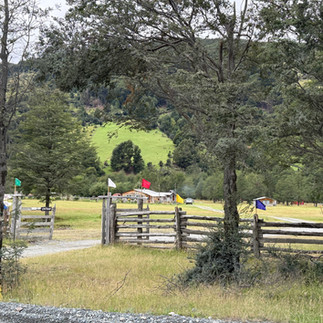

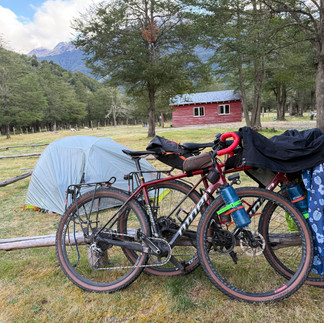

Despite the fact that we are both too old for the camping thing, we eventually drifted off to sleep that night listening to the sheep bleating their conversations all night long and the dogs barking at who knows what in the middle of nowhere.


Comments