

Northern Patagonia: Argentina & The Ruta 40
- Molly Goldstein

- Mar 4
- 5 min read
Updated: Mar 19

The Ruta 40 runs north–south along the eastern side of the Argentine Andes. Most of it sits on the western edge of the Pampa (dry grasslands) and high desert plateaus that stretch across a broad swath of the country’s mid‑latitudes. However, one section of the highway cuts far enough west to pierce the heart of the northern Patagonian Andes and forms one of the most beautiful drives, threading among lakes, rivers, and slopes forested with pine, fir, and coihue.
The town of El Bolsón sits at the southern end of this section, while San Martín de los Andes marks the northern terminus. Much of the road lies within two national parks: Nahuel Huapi (named for the large lake it encompasses) and Lanín National Park (named for the volcano within its boundaries). The stretch between Villa La Angostura and San Martín de los Andes is also known as the Seven Lakes Road and draws many visitors each year for its scenic beauty.

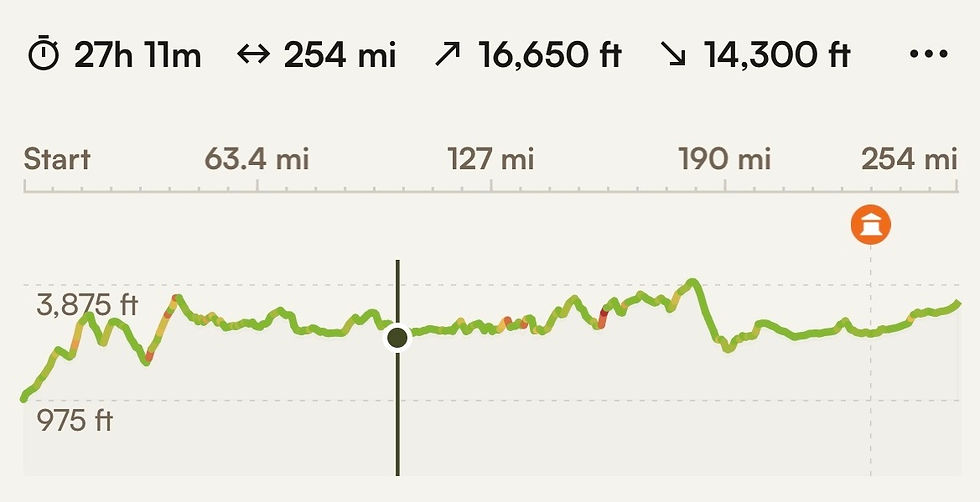
Andy and I have driven this road many times over the years. It’s our favorite part of Argentina, and we keep finding ourselves coming back. Last year we wanted to cycle the entire section but were thwarted on the southern stretch between Bariloche and El Bolsón by two terrible wildfires that shut the road down. For this reason we decided to take a bus from the Argentine/Chilean border towns of Los Antiguos and Chile Chico up to El Bolsón to start our second Patagonia ride this year. There was no way we wanted to ride our bikes from Los Antiguos—350 miles of desolate highland desert, often unpaved or severely potholed—so we were more than happy to take the ten‑hour bus ride instead.

Coming into El Bolsón, which sits in a beautiful green valley nestled between high mountain peaks with well‑cultivated farmland and orchards fed by crystal‑clear blue rivers, always makes me feel immediately at home. It reminds me of the prettier parts of Oregon’s Willamette Valley where I grew up—only narrower and ringed by higher peaks. I was, however, startled to see how much damage the wildfires had wrought right up to the town’s outskirts. Many areas were devastated; the trees on the hillsides were reduced to barren toothpicks. Even the trees along the roadway and in people's yards were charred black and had looked like they had been hit by a bomb, so splintered apart they were from the heat of the fire that swept through this area. It was a wonder the brave wildfire fighters were able to save so much of the town and residences in the area.

The heart of El Bolsón was intact when we arrived, looking much as it had a couple of years earlier. El Bolsón is known for its community of artists, its produce, and its artesanal beers. It was a fun place to stay for a couple of days before we hopped on our bikes and headed north.

The ride north included huge climbs (and exhilarating downhills) and cut through largely forested land. The further north we went, the better the views of the higher Andes peaks, especially from the passes. We stayed the night in the tiny hamlet of Río Villegas (they pronounced it: "Río Bishehas"—Argentine Spanish is so different!) at a quiet little hostería.
The next town north of El Bolsón is San Carlos de Bariloche, the largest town along this section of Ruta 40. The first time I heard of Bariloche was as a kid when I saw it in National Geographic. It looked quaint and gorgeous on a big lake with a ski resort beside it. Little did I know then that I would visit the town numerous times as an adult—and even ski at the resort!
The town is much bigger now than those old photos suggested. It has lost some of its charm as growth has been haphazard and not always mindful of beauty or infrastructure. Parts are still very nice, especially around the main plaza. Covering the stones of the plaza is a memorial to the approximately 30,000 people who were “disappeared” in the 1970s and early 1980s during the military dictatorship—a sobering reminder of one of Argentina’s most tragic eras.

We took advantage of a top‑notch bike shop in Bariloche to give our bikes a much‑needed tune and cleaning, as well as much needed haircuts for ourselves, before heading north to the charming town of Villa La Angostura on the western shore of Lago Nahuel Huapi. The ride took us around the lake’s southwestern shore through dry pampas before swinging back west over a pass and into the deep green of the forested mountains overlooking the lake. It’s always striking to move so abruptly between ecosystems, but that is the way of the Andes in Patagonia: the western slopes are lush and green, while the eastern slopes are dry scrubland.
We stayed a couple of days in Angostura, enjoying the little town on the lake. Lately it has seen a boom in tourist housing; but, like many places in Argentina, infrastructure hasn’t kept pace, and many projects remain unfinished or abandoned when costs rose and funding ran out.
We took two days to ride to San Martín de los Andes because the Ruta de los Siete Lagos (Seven Lakes Road) is so beautiful, and we wanted to return to Hostería Villarino at Lago Falkner, where we’d stayed last year - a place completely 'out there' in nature. Our second day included our last big climb before a long descent to Lake Lácar and San Martín. That descent and the road along the lake are among our favorites—the road comes right down to the lake where San Martín sits in a small valley on the eastern shore. San Martín is a small town with well‑laid streets lined with roses and shade trees, shops, restaurants, and well‑kept houses whose architecture evokes a European mountain town. We always feel at home here.
We spent four days in San Martín, waiting out rain and visiting our friend Gastón Piastrellini, whom we met about three years ago. He is the epitome of Argentine hospitality and friendliness.
When the rain broke, we faced a solid week of great weather for biking, so off we went. To reach the pass we planned to cross (Paso Tromen, also called Paso Mamuil Malal, depending on whether you’re Argentine or Chilean), we needed to first head east into the pampa for a stretch and ride through the town of Junín de los Andes, before turning back west and up to the pass. The road to Junín was unremarkable except for the steadily drier countryside.
However, the road from Junín up to the pass was fantastic! We were watched over the entire way by the towering Volcán Lanín—the only volcano in southern Argentina. As we rode west and upward, the volcano loomed larger until it dominated our view when we rode along its northern flank. At that point we also caught our first glimpses of native Araucaria australis (monkey‑puzzle) forests, which we were so excited to see.


Comments